
Introduction
"Sadat City - The Unknown Capital".. is a widely used title in 2026. It is not just a nickname; it represents a massive dream that began in the 1970s and abruptly stopped.
The late President Anwar El-Sadat established this city under Presidential Decree No. 123 in 1978. The master plan was for it to become Egypt's new administrative capital, fully replacing the overcrowded Cairo. It was supposed to house the government, ministries, and parliament in a strategic location midway between Cairo and Alexandria.
However, fate did not allow Sadat to complete his dream (he was assassinated in 1981). The city evolved into an "Industrial Fortress" instead. Today, it is highly successful but remains "unknown" to many Egyptians who hear about the current "New Administrative Capital" without realizing there was a first attempt 40 years prior.
Why Did Sadat Choose This City as the Capital? In the late 1970s, Cairo was suffocating from traffic, pollution, and severe population pressure. Sadat dreamed of a "New Egypt" after the October War and the peace treaty:
Ideal Location: Kilometer 93 on the Cairo-Alexandria Desert Road, perfectly situated between Egypt's two largest cities.
Massive Area: 121,000 acres (approx. 500 km²), vastly larger than any new city at the time.
The Vision: An integrated city (industrial, agricultural, residential, and administrative) surrounded by a vast green belt.
The Clear Goal: Relocate the government headquarters to relieve Cairo, making it the "New Capital" of Egypt.
Why Did the Dream Stop?
Sadat's Assassination (1981): The project lost its leader and primary advocate.
Mubarak's Era: The city was annexed to the Monufia Governorate in 1991 (instead of remaining an independent capital), and the focus shifted heavily to industry to provide jobs for the Delta region.
The Result: The city became an industrial powerhouse (over 2,000 factories, $7 billion in exports in 2025), but it lost its capital status.
Sadat City in 2026.. A Different Kind of Success Despite not becoming the political capital, it has become a shining star in the Egyptian economy:
Population: Around 750,000 residents (heading towards 1.5 million by 2030).
Industry: The largest industrial city in the central and western Delta (featuring a dry port, textile city, and food complexes).
Services: Major universities, advanced hospitals (a new 360-bed university hospital), massive malls, and a 50-acre Green Park.
Infrastructure: High-speed electric train, advanced road networks, and a 30,000-55,000 acre green belt.
Timeline: The Capital Dream (1978 - 2026)
(1978): Establishment Decree (No. 123) - Planned as new administrative capital.
(1979-1981): Construction begins & Sadat's assassination - Administrative aspect halted.
(1991): Annexed to Monufia Governorate - Transformed into an industrial city.
(2005-2010): Re-planning and expansion - Massive industrial and urban growth.
(2025-2026): Residential, commercial & medical boom - A highly successful "Industrial Fortress".
Conclusion: The Unknown Capital That Fulfilled Its Destiny Sadat City did not fail; it succeeded in something arguably greater. Sadat dreamed of a new capital, and the city became the "Capital of Industry and Development" in the Delta. If Sadat were alive today, he would be proud that his dream materialized into an organized, green city providing hundreds of thousands of jobs.
In 2026, fueled by the high-speed train and modern mega-projects, this city is a premium choice for living and investment. It is no longer just "unknown," but strongly "discovered" by a brand-new generation.
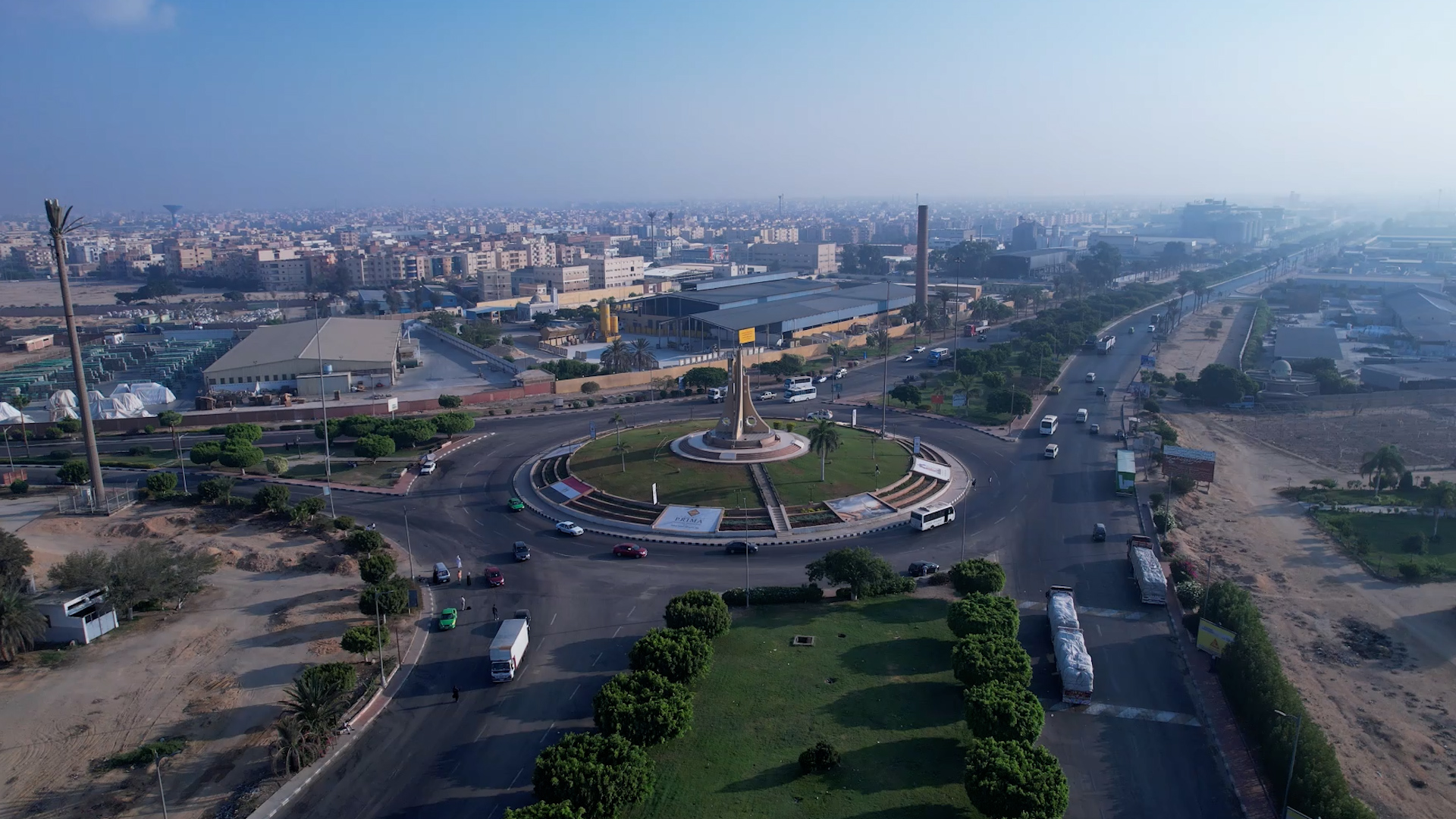
Sadat City
Sadat City: The Unknown Capital That Almost Ruled Egypt (2026 Guide)
•5 MIN READ